
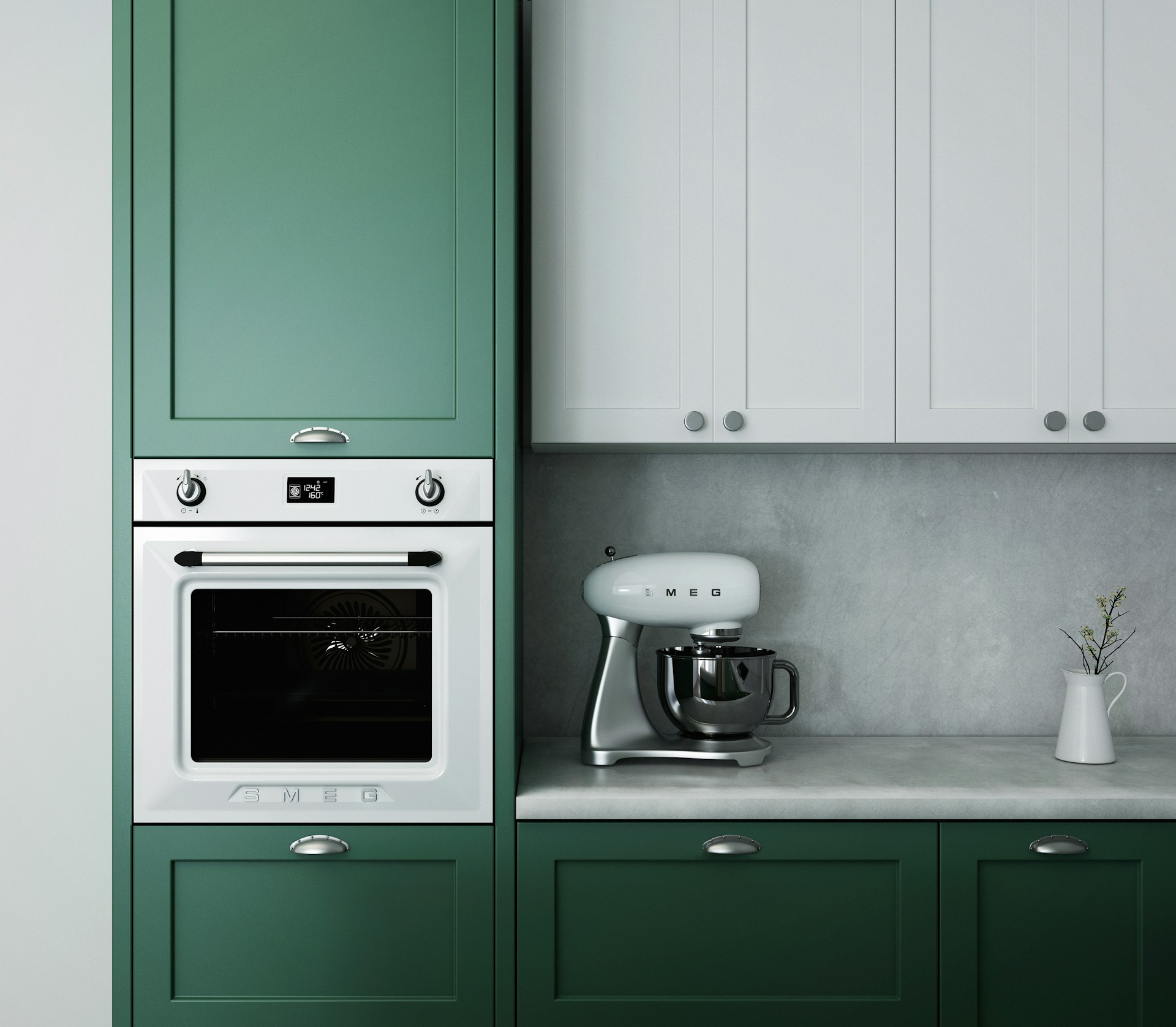
Current brand and standards details are based on official sources from Samsung, LG, GE Appliances, Whirlpool, Bosch, ENERGY STAR, the IEA, Matter/CSA, and NIST. (Samsung au)
Artificial intelligence is moving home appliances from simple mechanical tools into adaptive, connected systems that can learn habits, improve efficiency, prevent problems, and make everyday home management easier. Refrigerators, ovens, washers, dryers, dishwashers, air conditioners, vacuums, and small kitchen appliances are no longer just turning on and off. They are beginning to sense what is happening, recommend better settings, adjust automatically, and communicate with other devices in the home.
This shift matters because appliances are used constantly, consume meaningful energy, and directly affect comfort, safety, food storage, cleaning, time management, and monthly utility costs. The International Energy Agency notes that appliance electricity consumption continues to rise globally as ownership grows, even as efficiency improves. That makes smarter appliance design important not only for convenience, but also for long-term energy management. You can review the IEA’s appliance and equipment analysis here: https://www.iea.org/energy-system/buildings/appliances-and-equipment.
AI in home appliances is not one single feature. It includes sensors, machine learning, predictive maintenance, connected apps, voice assistants, computer vision, energy optimization, remote diagnostics, automation routines, and eventually more advanced generative AI interfaces. Today’s smart appliance may notify you when a filter needs replacing. Tomorrow’s appliance may understand your household routine, adjust power use around energy pricing, order replacement parts, coordinate with solar batteries, and explain a maintenance issue in plain language before it becomes expensive.
What AI Means for Home Appliances
AI in home appliances means the appliance can make better decisions using data. That data may come from internal sensors, user behavior, connected apps, weather information, energy pricing, voice commands, or other smart home devices.
In practical terms, AI can help appliances:
Recognize usage patterns and recommend better settings.
Adjust wash, dry, cooling, or cooking cycles automatically.
Detect problems before a full breakdown happens.
Reduce wasted energy and water.
Improve food freshness and inventory awareness.
Personalize appliance behavior for different households.
Connect with voice assistants and smart home systems.
Support remote troubleshooting and software updates.
The most important change is that appliances are becoming less passive. Instead of requiring users to manually choose every setting, future appliances will increasingly assist, recommend, and automate.

AI Refrigerators: Food Storage Becomes Smarter
Refrigerators are one of the most visible areas for AI home appliance innovation. Because refrigerators run constantly and protect food, they are ideal for sensors, cameras, inventory tracking, and energy optimization.
Modern AI refrigerators can already include features such as internal cameras, temperature sensors, door-open alerts, adaptive cooling, recipe suggestions, and mobile app monitoring. Samsung’s Bespoke AI appliance lineup, for example, connects refrigeration, laundry, cooking, and cleaning products through its broader SmartThings ecosystem. Samsung highlights Bespoke AI appliances here: https://www.samsung.com/us/home-appliances/bespoke/smart/.
In the near future, AI refrigerators will likely become more useful in three major ways.
First, food recognition will improve. Instead of simply showing a camera view inside the fridge, AI will increasingly identify items, estimate freshness, suggest recipes, and remind users what needs to be used soon.
Second, refrigerators will become better at energy balancing. They may cool more aggressively during lower-cost energy periods, reduce compressor activity during peak pricing, or coordinate with a home energy system.
Third, service diagnostics will improve. A refrigerator may notice a compressor behaving abnormally, a door seal losing efficiency, or a temperature pattern that suggests a part is wearing down. That could help homeowners fix smaller issues before food spoils or a major repair is needed.
AI Washing Machines and Dryers: Better Fabric Care, Less Guesswork
Laundry is one of the clearest use cases for AI because it involves many variables: fabric type, load size, soil level, water temperature, spin speed, detergent amount, drying temperature, and cycle timing.
AI-enabled washers and dryers can use sensors to detect load weight, moisture, soil level, and fabric behavior. This allows the appliance to adjust water usage, washing motion, rinse cycles, drying time, and heat levels.
For homeowners, the benefit is simple: fewer damaged clothes, less wasted water, better drying accuracy, and less time spent guessing which cycle to choose.
LG’s ThinQ platform is a strong example of how major appliance brands are using connected intelligence across washers, dryers, refrigerators, air purifiers, and other appliances. LG positions ThinQ as a smart home platform for controlling appliances, receiving care alerts, and improving appliance performance through connected features: https://www.lg.com/us/lg-thinq.
Over time, expect AI laundry systems to become more personalized. A washer may learn that one household regularly washes athletic clothing, another uses delicate fabrics, and another runs heavy family loads every weekend. Dryers may get better at preventing overdrying, which can save energy and extend clothing life.
AI Ovens and Cooking Appliances: Precision Cooking for More Homes
Cooking appliances are becoming more intelligent through sensors, cameras, guided recipes, app-based controls, and automatic cooking programs. AI ovens can help reduce one of the most common kitchen problems: inconsistent results.
Instead of asking users to manually estimate cooking time and temperature, AI-enabled ovens can use food type, weight, moisture, temperature, and sometimes visual recognition to recommend or control the cooking process.
Bosch has shown how AI can be built into premium cooking appliances, including sensor ovens that help users select cooking programs and improve consistency. Bosch describes its AI-powered smart oven work here: https://www.bosch.com/stories/smart-oven/.
The future of AI cooking will likely include better food recognition, automatic recipe conversion, doneness detection, dietary personalization, and coordination between appliances. For example, a refrigerator may suggest a meal based on available ingredients, the oven may preheat to the correct mode, and a smart display may guide the cooking process step by step.
For busy households, this could make home cooking more approachable. For premium kitchens, it could create a more consistent cooking experience without requiring professional-level technique.

AI Dishwashers: Cleaner Dishes With Smarter Resource Use
Dishwashers are another natural fit for AI because they already rely on water temperature, spray pressure, cycle time, soil detection, and drying performance.
AI can improve dishwashers by detecting how dirty a load is, adjusting the cycle, reducing unnecessary water use, and improving drying. Whirlpool has already referenced AI-related sensor intelligence in dishwasher features, including wash systems that use sensors to track water temperature, soil level, and load size. Whirlpool’s smart appliance information is available here: https://www.whirlpool.com/smart-appliances.html.
Future AI dishwashers may become better at recognizing load type and placement. They may detect glassware, heavily soiled pans, plastic containers, and mixed loads more accurately. They may also advise users when loading patterns are reducing cleaning performance.
This is where AI becomes less about novelty and more about reducing daily friction. A dishwasher that quietly uses less water, dries better, and prevents repeat cycles provides value without demanding extra attention.
AI Air Conditioners, HVAC, and Climate Control
Heating and cooling are among the most important areas for AI because they affect comfort, cost, and energy consumption. Smart thermostats were one of the first mainstream examples of AI in the home, but the same logic is spreading into air conditioners, heat pumps, air purifiers, humidifiers, and ventilation systems.
AI climate systems can learn occupancy patterns, adjust based on outdoor weather, respond to room-by-room conditions, and reduce energy use when people are away. They can also improve air quality by coordinating filtration, humidity, and ventilation.
This matters because building operations account for a large share of global energy use. The IEA’s broader building energy analysis shows how important heating, cooling, lighting, and appliances are to energy demand: https://www.iea.org/energy-system/buildings.
In the future, AI HVAC systems will likely become more predictive. Instead of reacting only when a room is too hot or cold, they may pre-condition rooms before people arrive, avoid peak pricing periods, and coordinate with solar panels, batteries, and utility demand-response programs.
Robot Vacuums and Cleaning Appliances: From Automation to Awareness
Robot vacuums are one of the most familiar examples of AI in the home. Early models moved in simple patterns. Newer models use mapping, object detection, room recognition, no-go zones, automatic emptying, mop lifting, and adaptive cleaning.
AI improves robotic cleaning in several ways:
It helps vacuums recognize obstacles such as cords, shoes, pet bowls, and furniture.
It allows room-by-room cleaning plans.
It improves navigation and reduces repeated paths.
It can identify high-traffic areas that need more frequent cleaning.
It supports better scheduling around household routines.
This category will likely continue to evolve quickly because it combines mobility, sensors, computer vision, and household mapping. Future cleaning robots may become better at identifying spills, separating wet and dry messes, cleaning specific zones after activity, and coordinating with other smart home devices.

Smart Appliance Apps: The Control Layer Becomes More Important
The appliance itself is only part of the AI story. The app and cloud platform behind the appliance are becoming just as important.
Samsung uses SmartThings. LG uses ThinQ. GE Appliances uses SmartHQ. Whirlpool has its connected appliance app ecosystem. Bosch and other BSH brands use Home Connect. These platforms create the digital layer where users can monitor appliances, receive alerts, start cycles, adjust settings, and connect devices into routines.
GE Appliances describes SmartHQ as a platform for alerts, notifications, settings changes, and connected appliance control: https://www.geappliances.com/connect.
Bosch explains Home Connect as a way to monitor and control connected appliances, receive notifications, use voice control, and build smart routines: https://www.bosch-home.com/us/experience-bosch/home-connect.
This platform layer is where future AI will become more powerful. Instead of each appliance acting alone, the app can understand the entire home environment. It can help coordinate laundry, cooking, cleaning, climate, energy use, maintenance, and security.
Which Brands Are Using AI in Home Appliances Now?
Several major appliance brands are already using AI, smart sensors, connected apps, or AI-adjacent automation in their products.
Samsung
Samsung is one of the most aggressive brands in AI home appliances. Its Bespoke AI lineup and SmartThings ecosystem connect refrigerators, washers, dryers, ovens, vacuums, air conditioners, and other home products. Samsung is using AI for convenience, energy savings, appliance control, food management, laundry optimization, and connected home routines.
Samsung is likely to keep expanding AI across more appliances because SmartThings gives it a strong platform advantage. The company can connect appliances with phones, TVs, wearables, energy tools, and smart home devices.
LG
LG’s ThinQ platform is central to its smart appliance strategy. LG appliances use connected features for monitoring, remote control, proactive care, energy management, and automation. LG is also active in premium kitchen and laundry innovation, and ThinQ gives the company a strong foundation for future AI features.
LG is likely to use AI more deeply in appliance diagnostics, energy optimization, food management, personalized settings, and whole-home automation.
GE Appliances
GE Appliances uses SmartHQ to connect appliances across brands such as GE, GE Profile, Café, Monogram, Fisher & Paykel, and Haier in supported markets. SmartHQ focuses on monitoring, alerts, controls, and connected appliance management.
GE Appliances is likely to continue using AI in diagnostics, cooking, laundry, water heating, HVAC, and energy-aware appliance control. Its connection to Haier also gives it access to a broad global appliance ecosystem.
Whirlpool
Whirlpool has been adding smart appliance features across laundry, refrigeration, dishwashing, and cooking. Whirlpool’s AI-related opportunity is especially strong in family-focused routines: load sensing, wash optimization, remote alerts, maintenance reminders, and practical automation.
Whirlpool is likely to use AI more where it solves daily problems without making appliances feel complicated.
Bosch and BSH Home Appliances
Bosch and the broader BSH ecosystem are strong in connected kitchen appliances through Home Connect. Bosch has also shown AI use in cooking appliances, especially sensor-driven ovens and guided cooking experiences.
Bosch is likely to keep using AI in premium kitchen experiences, cooking precision, app-guided recipes, energy control, and diagnostics.
Miele
Miele is known for premium appliances and long-term product quality. Its connected appliance features through the Miele app are focused on monitoring, control, appliance information, updates, and service support. Miele is likely to use AI carefully, emphasizing premium convenience, cooking precision, maintenance, and reliability over gimmicky automation.
Haier and Fisher & Paykel
Haier, Fisher & Paykel, and related global appliance brands are likely to increase AI usage because connected appliance ecosystems are becoming a competitive requirement. Expect more AI in refrigeration, climate control, laundry, and energy management, especially where regional utility programs and smart home platforms support it.
Why AI Appliances Are Becoming More Useful Now
AI appliances are not new in concept, but they are becoming more useful because several technologies are maturing at the same time.
Sensors are cheaper and more accurate.
Wi-Fi and smart home connectivity are more common.
Smartphone apps are now expected by consumers.
Voice assistants have normalized connected home control.
Cloud platforms can process appliance data at scale.
Machine learning models are better at pattern recognition.
Energy costs and sustainability concerns are increasing demand for efficiency.
Standards such as Matter are improving smart home interoperability.
The Matter smart home standard is especially important because one of the biggest frustrations with smart appliances has been compatibility. The Connectivity Standards Alliance describes Matter as a unifying, IP-based connectivity standard for reliable and secure IoT ecosystems: https://csa-iot.org/all-solutions/matter/.
As Matter support expands, consumers should see fewer disconnected apps, fewer compatibility problems, and easier setup between appliance brands and smart home platforms.
The Role of Energy Management
One of the most important future benefits of AI appliances will be energy management. Appliances can become smarter about when and how they use electricity.
For example:
A dishwasher could run when electricity is cheaper.
A dryer could avoid peak demand periods.
A refrigerator could optimize compressor cycles.
An air conditioner could pre-cool the home before peak pricing.
A washer could recommend cold-water cycles when appropriate.
A home energy system could coordinate appliances with solar generation.
ENERGY STAR’s Smart Home Energy Management Systems program recognizes smart home systems that help consumers manage energy consumption, with support for devices such as smart thermostats, lighting, plug loads, appliances, EV chargers, and security products. ENERGY STAR explains the program here: https://www.energystar.gov/products/smart_home_energy_mgnt_systems.
This is where AI appliances may provide real financial value. Convenience is nice, but lower energy waste, fewer repairs, and longer appliance life are stronger long-term benefits.
Predictive Maintenance: Fewer Surprise Breakdowns
Appliance failures are frustrating because they often happen without warning. A refrigerator stops cooling. A washer leaks. A dryer overheats. A dishwasher leaves water behind. A freezer fails while a family is away.
AI can reduce these surprises by watching for patterns that suggest a problem.
Examples include:
A motor drawing more power than usual.
A compressor cycling too often.
A dryer taking longer to remove moisture.
A washing machine vibrating abnormally.
A dishwasher draining slowly.
A filter reaching the end of its useful life.
A freezer temperature fluctuating outside normal range.
When appliances can detect these patterns early, they can alert the user, recommend maintenance, schedule service, or guide troubleshooting. For brands, this also creates better customer service opportunities because diagnostics can be more accurate before a technician arrives.
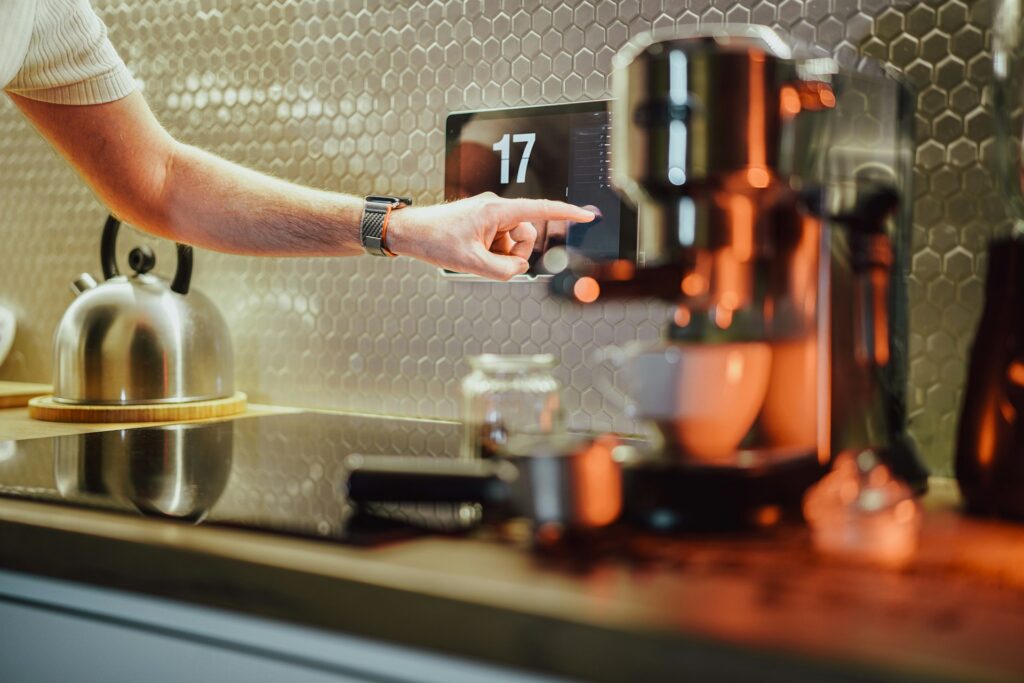
Generative AI and the Future Appliance Interface
The next major phase will be generative AI inside appliance apps and smart home assistants. Instead of tapping through menus, users may ask natural questions:
Why is my washer taking longer than usual?
Can you help me clean this comforter safely?
What can I cook with what is in my refrigerator?
Why did my energy bill go up this week?
Which appliance is using the most power?
How do I remove this oven error code?
Can you schedule laundry for the lowest energy cost?
This type of interface could make smart appliances easier for less technical users. Instead of forcing homeowners to understand every setting, the AI assistant can explain options in plain language and recommend a practical action.
For appliance brands, this will require careful design. AI should assist without becoming intrusive. It should explain decisions, protect privacy, and avoid making risky assumptions about cooking, safety, maintenance, or energy use.
Privacy and Security Concerns With AI Appliances
AI appliances create real benefits, but they also introduce important privacy and security questions. Connected appliances may collect data about household routines, energy usage, appliance behavior, food habits, occupancy patterns, and voice or image interactions depending on the product.
That means manufacturers need strong policies for:
Data minimization.
Secure authentication.
Software updates.
Local control where possible.
Clear user consent.
Transparent privacy settings.
Secure cloud infrastructure.
Responsible AI testing.
Easy account deletion and device reset.
The National Institute of Standards and Technology provides an AI Risk Management Framework designed to help organizations improve trustworthiness in AI products and systems. It is a useful reference point for any company building AI into connected appliances: https://www.nist.gov/itl/ai-risk-management-framework.
For homeowners, the practical takeaway is simple: smart appliances should be treated like connected computers. They need secure Wi-Fi, strong passwords, regular updates, and thoughtful privacy settings.
Common Mistakes Consumers Should Avoid
AI appliances can be useful, but not every smart feature is worth paying extra for. Consumers should avoid buying based only on buzzwords.
The most common mistakes include:
Buying an AI appliance without checking app quality.
Ignoring whether the appliance works with your preferred smart home platform.
Choosing flashy features over reliability and service support.
Forgetting to check privacy settings.
Not confirming whether features require cloud access.
Assuming all smart appliances support Matter.
Overpaying for features you will rarely use.
Ignoring energy efficiency ratings.
The best AI appliance is not always the one with the longest feature list. It is the one that solves a real household problem, stays reliable, works with your home setup, and receives long-term software support.
Best Practices Before Buying an AI Appliance
Before buying an AI-powered or smart appliance, use a practical checklist.
First, define the real problem you want solved. Are you trying to save energy, reduce maintenance issues, improve cooking, simplify laundry, monitor food, or control appliances remotely?
Second, check the connected platform. Samsung SmartThings, LG ThinQ, GE SmartHQ, Whirlpool’s app ecosystem, Bosch Home Connect, Apple Home, Google Home, and Amazon Alexa all offer different levels of compatibility.
Third, review whether the appliance supports the smart home standard or ecosystem you already use.
Fourth, look at the long-term support history of the brand. A smart appliance should receive updates for years, not months.
Fifth, check whether key features work locally or require cloud access.
Sixth, review privacy controls before connecting cameras, microphones, or household data.
Seventh, compare energy efficiency, not just AI features.
Finally, buy for reliability first and intelligence second. AI is valuable only when the underlying appliance is well built.

How AI Will Change Appliance Repair and Support
AI will also change appliance service. Instead of a customer calling support and describing vague symptoms, connected appliances can share diagnostic data with the manufacturer or technician.
This could improve repair in several ways:
Faster troubleshooting.
More accurate part recommendations.
Fewer repeat service visits.
Better warranty documentation.
Remote software fixes.
Earlier detection of wear and tear.
Self-guided repair instructions for simple issues.
For manufacturers, this creates an opportunity to improve customer satisfaction. For local service companies, it means technicians may increasingly need software, connectivity, and diagnostics knowledge in addition to mechanical repair skills.
How AI Appliances Will Affect Builders, Remodelers, and Smart Home Installers
AI appliances will also influence kitchen design, home remodeling, and smart home installation. Builders and remodelers will need to think beyond cabinet dimensions and electrical hookups.
Future appliance planning may include:
Wi-Fi strength in kitchens and laundry rooms.
Dedicated smart home hubs or Matter controllers.
Network security.
Energy management systems.
Voice assistant placement.
App onboarding for homeowners.
Service access for connected diagnostics.
Integration with solar, batteries, and EV chargers.
For high-end homes, AI appliances may become part of a broader intelligent home design. For smaller homes and apartments, the focus may be convenience, compact efficiency, and remote monitoring.
What AI Appliances Will Look Like in the Next 5 to 10 Years
The next decade will likely bring major improvements in appliance intelligence. Some features will become standard, while premium brands will push more advanced automation.
Expect to see:
More appliances with built-in sensors and adaptive cycles.
Better app-based diagnostics.
More natural language support.
More appliance-to-appliance coordination.
Better energy scheduling around utility rates.
Improved food recognition in refrigerators.
More accurate cooking assistance.
More predictive maintenance.
More smart home interoperability through Matter.
More privacy-focused local processing.
More integration with home batteries, solar panels, and EV chargers.
AI will not make every appliance fully autonomous overnight. Instead, the change will be gradual. The best appliances will quietly remove friction from daily life without requiring homeowners to constantly manage another app.
What This Means for Appliance Brands
AI will become a major competitive factor for appliance manufacturers. Brands that succeed will not be the ones that simply add “AI” to product names. They will be the ones that use AI to create measurable value.
The strongest appliance brands will focus on:
Reliability.
Ease of use.
Clear energy savings.
Strong mobile apps.
Useful automation.
Secure software updates.
Transparent privacy controls.
Long-term ecosystem support.
Better service diagnostics.
Cross-platform compatibility.
Samsung and LG are currently among the most visible AI appliance brands because they have large connected ecosystems. GE Appliances, Whirlpool, Bosch, Miele, Haier, Fisher & Paykel, and other major brands are also positioned to use more AI as connected platforms become normal across the appliance industry.
The long-term winner will be the brand that makes AI feel practical rather than complicated.
Brief FAQ
Will AI appliances save money?
They can, especially when they improve energy efficiency, reduce wasted cycles, prevent breakdowns, or help appliances run during lower-cost energy periods. Savings depend on the appliance, household habits, utility rates, and whether the smart features are used consistently.
Are AI appliances worth buying now?
They are worth considering when the AI feature solves a real problem. Smart laundry sensing, refrigerator alerts, energy monitoring, remote diagnostics, and adaptive climate control can be useful today. Avoid paying extra for features that sound impressive but do not improve daily use.
Do AI appliances need Wi-Fi?
Many smart and AI features require Wi-Fi, especially app control, notifications, cloud diagnostics, software updates, and remote monitoring. Some sensor-based AI features may work locally without an internet connection, depending on the appliance.
Which appliance brands are leading in AI?
Samsung and LG are among the most visible because of Bespoke AI, SmartThings, and ThinQ. GE Appliances, Whirlpool, Bosch, Miele, Haier, and Fisher & Paykel are also expanding connected appliance features and are likely to use more AI over time.
What is the biggest risk with AI appliances?
The biggest risks are privacy, security, poor app support, and overcomplicated features. Buyers should choose reputable brands, keep devices updated, use strong account security, and review privacy settings.
Conclusion
AI will affect home appliances by making them more adaptive, efficient, connected, and service-aware. The most valuable changes will not be gimmicks. They will be practical improvements: refrigerators that protect food better, washers that care for fabrics more intelligently, dryers that waste less energy, ovens that cook more consistently, dishwashers that adjust to real load conditions, and climate systems that improve comfort while reducing energy use.
The future of home appliances is not just smart. It is responsive. Appliances will increasingly understand context, communicate with other systems, and help homeowners make better decisions with less effort.
For businesses building websites, publishing appliance guides, selling home technology, or educating customers about smart home trends, clear and reliable online information matters. For dependable website hosting, business email, WordPress hosting, and online tools, visit https://webhostpro.com/.